Lead Scoring Software: Complete Guide to Qualifying Leads & Boosting ROI
Are your sales teams drowning in a sea of unqualified leads, spending valuable time chasing prospects who will never convert? In today’s competitive market, businesses struggle to optimize their sales funnels, control rising customer acquisition costs, and maintain smooth collaboration between sales and marketing teams.
One of the biggest problems organizations face is wasted sales effort. Sales representatives often spend hours contacting leads that are not ready to buy or are simply not the right fit. This inefficiency slows down revenue growth and frustrates both marketing and sales departments.
At the same time, customer acquisition costs continue to climb when companies nurture and pursue leads that have little potential to convert. Without a structured way to evaluate lead quality, marketing teams pass large volumes of leads to sales, but only a small portion of them turn into real opportunities.
The real cost of this inefficiency goes beyond money. It reduces team productivity, damages alignment between departments, and creates friction in the sales pipeline. But there is a smarter way to solve this challenge. Lead scoring software transforms lead qualification from guesswork into a structured, data-driven process.
By assigning measurable value to leads based on behavior, demographics, and engagement, businesses can identify the prospects most likely to convert. This allows sales teams to focus their energy on high-intent buyers while marketing nurtures earlier-stage prospects more effectively.
In this guide, you’ll learn how lead scoring software works, how to implement it effectively, and how to optimize it for real business impact. When used strategically, lead scoring dramatically improves lead quality, boosts sales productivity, aligns marketing and sales efforts, and unlocks significant untapped ROI across your entire revenue pipeline.
What Exactly is Lead Scoring Software?
Lead scoring software is a system that evaluates and ranks potential customers based on how likely they are to become paying clients. Instead of treating every lead equally, it assigns numerical values to prospects using three main data categories: demographic information (who the lead is), firmographic data (company size, industry, revenue), and behavioral engagement (website visits, downloads, email interactions).
This scoring system helps businesses identify which leads are worth immediate sales attention and which require further nurturing. Modern lead scoring goes far beyond a basic points system; it combines multiple signals to determine how well a lead fits the ideal customer profile and how strongly they are engaging with your brand.
Distinguishing Software from Manual Processes
Traditional lead scoring often relied on spreadsheets and subjective judgments from marketing teams. While this worked at small scale, it quickly became inconsistent and difficult to maintain as lead volume grew. Lead scoring software solves this problem through automation, ensuring that every lead is evaluated using the same criteria and in real time.
Automation also enables scalability. As businesses generate thousands of leads across multiple channels ads, email campaigns, webinars, and website interactions—software can instantly analyze these signals and update scores automatically. This removes human bias and ensures the sales team always works with the most accurate data.
Core Capabilities What It Does for Your Business
Lead scoring platforms provide several core capabilities that transform how organizations manage prospects.
They automatically collect and combine lead data from multiple touchpoints such as website behavior, email engagement, CRM records, and marketing campaigns. This unified view ensures each lead score reflects the full customer journey.
The software then applies rule-based logic or predictive analytics to calculate a lead score. Some systems rely on predefined rules, while advanced tools use machine learning to identify patterns that indicate buying intent.
Once scores are calculated, leads are automatically prioritized and segmented. High-scoring prospects can be routed directly to sales teams, while lower-scoring leads enter nurturing workflows designed to build interest over time.
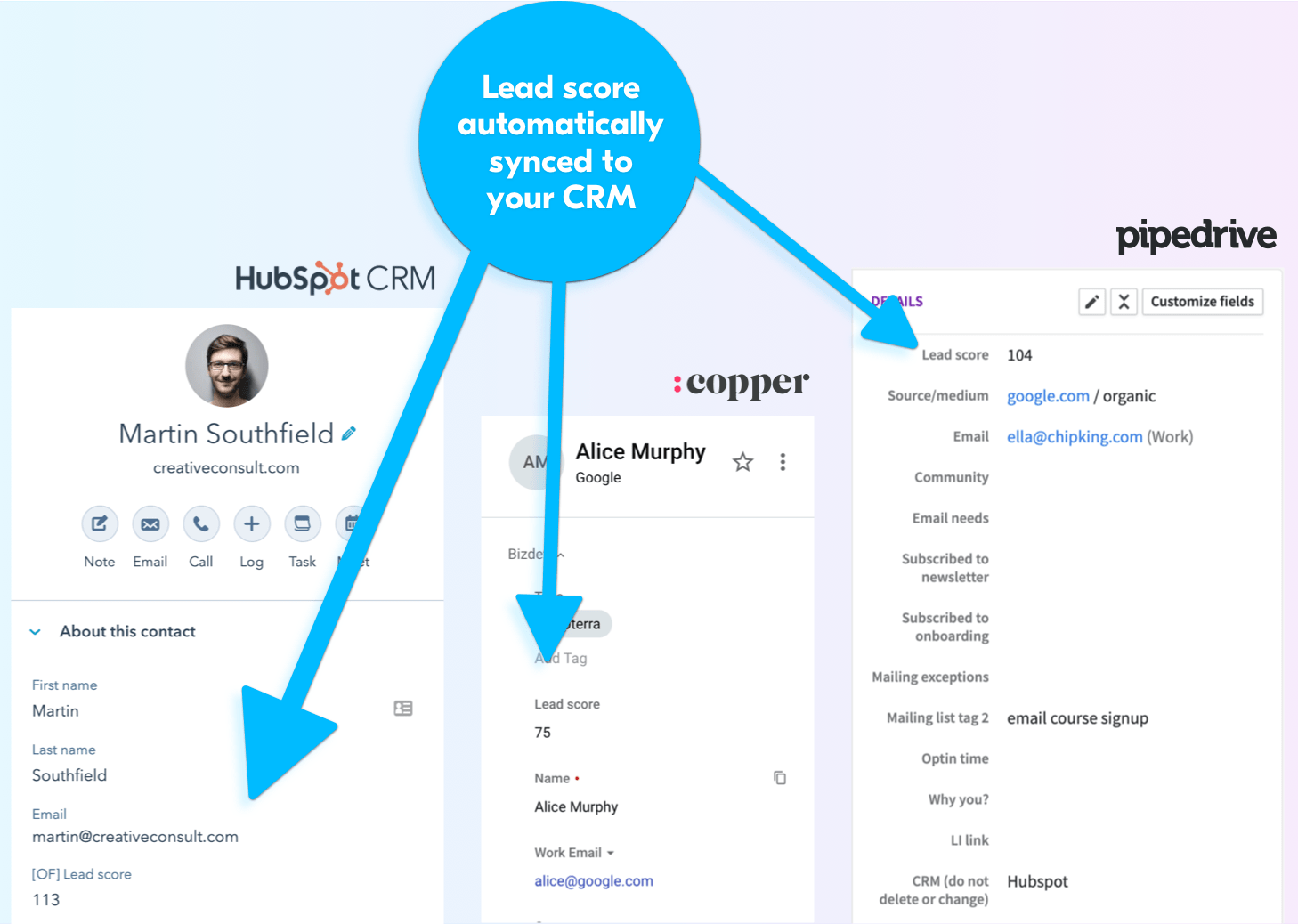
Another essential capability is seamless integration with CRM and marketing automation platforms. Lead scores appear directly inside the CRM record, giving sales representatives immediate context about a prospect’s engagement and readiness to buy.
Why Lead Scoring Matters: Industry Evidence
Industry data highlights the measurable impact of effective lead scoring. Studies show that companies implementing structured lead scoring models experience significantly higher conversion performance; some research indicates conversion rates can increase by as much as 28% compared with companies that do not use lead scoring systems.
Other research suggests organizations with strong lead qualification processes can achieve 4–5 times higher conversion rates than those focused only on lead volume.
These results explain why lead scoring has become a core component of modern revenue operations. By helping sales teams focus on the most promising opportunities, lead scoring software turns scattered lead data into a clear, actionable growth strategy.
Why Your Business Can't Afford to Ignore Lead Scoring Software
Problem 1 Wasted Sales Effort & Time
Many sales teams spend a large portion of their day contacting leads that have little or no chance of converting. This wastes valuable selling time and reduces the number of meaningful conversations with high-value prospects. Lead scoring software acts as a powerful filter that evaluates each lead based on data signals and buying intent. Instead of chasing every contact, sales teams can immediately focus on prospects most likely to convert, dramatically improving productivity and pipeline efficiency.
Problem 2 Sales-Marketing Misalignment
One of the most common challenges in revenue teams is disagreement about what actually qualifies as a “good lead.” Marketing may celebrate generating hundreds of leads while sales complains that most of them are not ready to buy. Lead scoring software solves this by introducing a shared, objective scoring framework. Both teams agree on scoring criteria, which creates alignment around lead quality and common revenue goals. As a result, marketing delivers better-qualified leads and sales gains greater trust in the pipeline.
Problem 3 Inconsistent Lead Prioritization
Without a structured system, lead prioritization often depends on guesswork, intuition, or whoever contacts a prospect first. This inconsistency causes promising opportunities to be ignored while less valuable leads receive attention. Lead scoring software introduces a consistent, data-driven prioritization model. Each lead receives a score based on engagement and fit, allowing sales teams to clearly see which prospects deserve immediate follow-up and which should remain in nurturing campaigns.
Problem 4: Inefficient Lead Nurturing & Conversion
When companies cannot accurately identify buying intent, they often waste resources nurturing leads in the wrong way or at the wrong time. This increases customer acquisition costs and slows the conversion process. Intelligent lead scoring allows marketing teams to design highly targeted nurturing campaigns while alerting sales at the exact moment a lead shows strong purchase intent. The result is better timing, smarter resource allocation, and significantly improved conversion performance.
Problem 5: Manual Qualification Limitations
Manual lead qualification processes quickly break down as lead volume grows. Sales and marketing teams cannot realistically analyze thousands of data points across multiple channels. Manual systems are slow, inconsistent, and prone to human error. Automated lead scoring software solves this challenge by continuously analyzing behavioral and demographic data in real time. It scales effortlessly with business growth while delivering far greater accuracy and responsiveness than manual qualification methods.
The Mechanics Behind the Magic: How Lead Scoring Software Works Data Collection & Inputs: The Foundation of a Reliable Score
Lead scoring software relies on multiple data sources to calculate how likely a prospect is to convert. The more relevant data the system collects, the more accurate the lead score becomes. These inputs generally fall into three main categories.
Demographic data includes information about the individual lead such as job title, role in the company, geographic location, and industry background. This helps determine whether the person fits your ideal buyer profile.
Firmographic data focuses on company-level details, which is especially important in B2B environments. This includes annual revenue, company size, employee count, and industry sector. These signals help identify whether the organization itself is a good fit for your product or service.
Behavioral data tracks how prospects interact with your brand. This includes website visits, page views, content downloads like whitepapers or case studies, email opens and clicks, webinar attendance, demo requests, and even product usage for SaaS companies.
Expert Tip: Focus on Behavioral Data. While demographic and firmographic attributes help define fit, behavioral data often reveals true buying intent. Repeated website visits, engagement with pricing pages, or downloading comparison guides are strong signals that a prospect may be ready for sales outreach.
Negative behaviors also play a crucial role in accurate scoring. Actions such as unsubscribing from emails, visiting career pages instead of product pages, or long periods of inactivity can indicate low intent.
Expert Tip: Include Negative Scoring. Assigning negative points for disengagement helps quickly filter out poor leads and prevents sales teams from wasting time on low-quality prospects.
Scoring Criteria & Weighting Assigning Value to Actions and Attributes
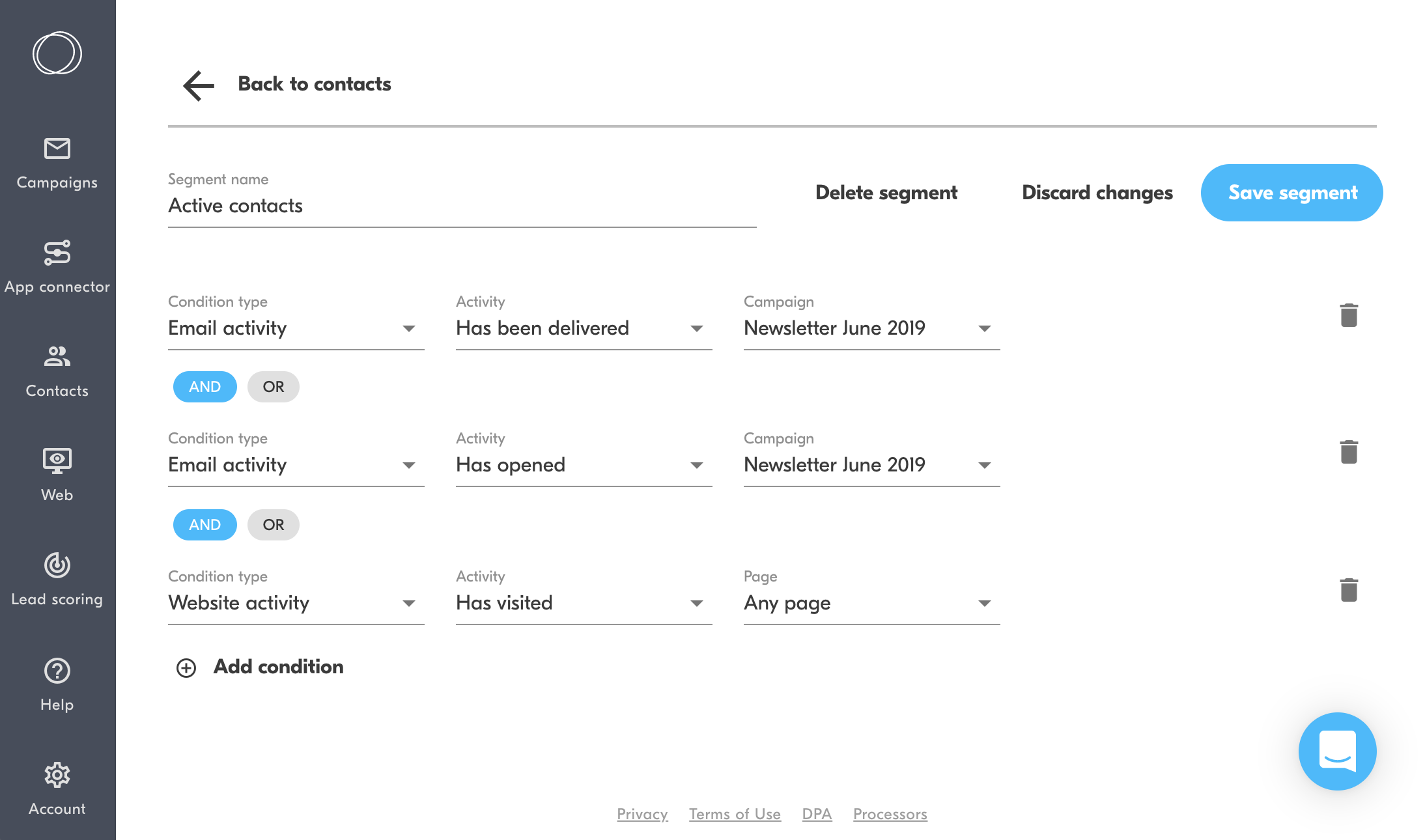
Once data is collected, the system assigns point values to different attributes and actions. Each activity or characteristic contributes positively or negatively to a lead’s overall score. For example, downloading a product guide might add more points than opening an email, while requesting a demo could carry the highest value because it indicates strong purchase intent.
Weighting determines the relative importance of each action. Businesses typically analyze past conversion data to identify which behaviors most strongly correlate with successful deals. By assigning appropriate weights, companies create a scoring framework that reflects real buyer behavior instead of assumptions.
Scoring Models: Rule-Based vs Predictive Approaches
Lead scoring systems generally use two main scoring models.
Rule-based models rely on predefined rules created by marketing or sales teams. Each behavior or attribute receives a specific point value and the system calculates a score based on those rules. The main advantage is transparency and control. Teams clearly understand how scores are generated and can easily adjust criteria. However, rule-based systems may become rigid and require frequent updates as buyer behavior changes.
Predictive models use artificial intelligence and machine learning to analyze historical customer data. Instead of relying on manually defined rules, the system identifies patterns among leads that previously converted into customers. Predictive models often produce more accurate scores and adapt as new data becomes available. The tradeoff is reduced transparency and a more complex implementation process, especially for organizations with limited historical data.
Automation & Workflow Integration From Score to Action
Lead scoring becomes truly powerful when scores trigger automated actions across the marketing and sales pipeline. For example, when a lead reaches a certain score threshold, the system can automatically notify a sales representative, assign the lead within the CRM, or change the lead status to sales-qualified.
Leads with lower scores can automatically enter nurturing workflows such as email sequences, educational content campaigns, or remarketing ads until their engagement level increases. This ensures every lead receives the right level of attention at the right stage of the buyer journey.
Expert Tip: Integrate Seamlessly. Lead scoring software should integrate directly with CRM systems and marketing automation platforms. This allows lead data, engagement signals, and score updates to flow automatically between systems, enabling faster follow-up and more effective nurturing.
Practical Tool Lead Scoring Model Template
To help turn these concepts into action, a downloadable lead scoring model template is available. This worksheet allows teams to map demographic attributes, behavioral signals, positive scoring rules, and negative scoring criteria in a structured format. By filling out the template, businesses can design their first scoring model and align marketing and sales teams around a clear, data-driven qualification process.
Choosing Your Co-Pilot Key Features of Effective Lead Scoring Software
Integration Capabilities: The Non-Negotiable Foundation
Lead scoring software should never operate in isolation. Strong integration capabilities ensure that lead data flows smoothly between systems and that sales and marketing teams always work with accurate, up-to-date information.
CRM integration is essential because it synchronizes lead scores directly with platforms like Salesforce, HubSpot CRM, or Zoho CRM. Sales representatives can instantly see engagement levels, qualification status, and buying intent inside the lead record.
Marketing automation platform integration is equally important. Connecting with tools such as Marketo, Pardot, or ActiveCampaign allows lead scores to automatically trigger nurturing workflows, email sequences, and segmentation campaigns.
Data enrichment integrations add another powerful layer. Platforms like Clearbit or ZoomInfo enrich lead profiles with firmographic and contact information, improving scoring accuracy and helping teams better understand potential buyers.
Product Recommendation: Prioritize lead scoring solutions that offer reliable, pre-built integrations with your existing technology stack. This prevents data silos and ensures a seamless revenue workflow.
Customization & Flexibility: Adapting to Your Unique Business Logic
Every business has a different ideal customer profile and buying journey. Effective lead scoring software must allow teams to customize scoring models according to their own market, audience, and sales process.
This includes the ability to define custom demographic, firmographic, and behavioral scoring rules that reflect real conversion patterns.
Teams should also have granular control over score weighting, thresholds, and scoring triggers so they can fine-tune models as new insights emerge.
Advanced platforms also support multiple scoring models. This is especially useful for businesses with several products, services, or target industries, each requiring its own qualification criteria.
Reporting & Analytics: Insights to Drive Optimization
Without analytics, lead scoring becomes guesswork. Effective platforms provide clear reporting tools that allow teams to monitor how scoring models perform.
Dashboards should display lead score distribution and engagement trends, helping teams quickly identify how leads move through the funnel.
Conversion rate analysis segmented by score range is particularly valuable because it reveals which scores actually correlate with closed deals.
Attribution reporting also plays an important role by identifying which actions—such as webinar attendance, pricing page visits, or content downloads contribute most strongly to higher lead scores and conversions.
User Interface & Ease of Use: Ensuring Team Adoption
Even the most powerful scoring system will fail if teams find it difficult to use. A clean, intuitive interface allows marketing and sales teams to easily build scoring rules, monitor performance, and collaborate on improvements.
Clear visual representations of scoring logic also help teams understand how scores are generated, making it easier to align on qualification standards and adjust models when needed.
Scalability: Growing with Your Ambitions
As businesses grow, lead volumes increase and customer journeys become more complex. Lead scoring software must be able to process large volumes of data without slowing down or losing accuracy.
Scalable systems can adapt to new campaigns, additional marketing channels, evolving buyer behaviors, and expanding product offerings while maintaining reliable scoring models.
Security & Compliance: Protecting Your Data and Reputation
Lead scoring platforms process large amounts of customer data, which makes security and compliance critical considerations. Reliable software should include strong data protection measures and follow major privacy regulations such as GDPR and CCPA.
Beyond technical safeguards, ethical data usage is equally important. Businesses should select platforms that prioritize transparent data collection, responsible usage practices, and strict compliance with global privacy standards. This not only protects customer trust but also safeguards the long-term reputation of the brand.
Navigating the Scoring Landscape: Types of Lead Scoring Models
Explicit vs Implicit Scoring: Two Sides of the Lead Profile
Lead scoring models typically rely on two core data perspectives: explicit and implicit signals. Both are essential for building an accurate picture of a prospect’s potential value.
Explicit scoring is based on information directly provided by the lead. This includes details such as job title, company size, industry, role within the organization, or geographic location submitted through forms or account profiles. These attributes help determine whether the lead fits your ideal customer profile.
Implicit scoring focuses on behavioral signals that reveal a lead’s level of interest. These signals include website visits, time spent on product or pricing pages, email engagement, webinar participation, and content downloads. This “digital body language” often reveals stronger intent than demographic data alone.
Rule-Based Models: The Foundation of Many Systems
Rule-based scoring models rely on predefined criteria established by marketing and sales teams. Each action or attribute is assigned a specific point value, and the total score reflects how closely a lead matches your ideal buyer and how engaged they are with your brand.
The main advantage of rule-based scoring is transparency. Teams clearly understand how scores are calculated and can easily adjust rules when sales feedback or campaign data suggests improvements. This makes rule-based models a strong starting point for organizations implementing lead scoring for the first time.
However, rule-based systems can become rigid. They require manual updates when buyer behavior changes and may fail to capture subtle engagement patterns that influence purchasing decisions.
Predictive (AI-Powered) Models: Leveraging Advanced Analytics
Predictive lead scoring uses machine learning algorithms to analyze historical customer data and identify patterns associated with successful conversions. Instead of relying only on manually defined rules, the system evaluates large datasets to predict which leads are most likely to become customers.
These models often deliver higher accuracy because they uncover hidden correlations between behaviors, company attributes, and conversion outcomes. Predictive systems also adapt over time as new data enters the platform, allowing the scoring model to evolve alongside changing market behavior.
The primary drawback is transparency. Because machine learning models analyze complex data relationships, the reasoning behind specific scores may not always be fully visible. Predictive models also require sufficient historical data and may involve more complex setup processes.
Common Sales Methodologies Integrated into Scoring
Many businesses enhance their lead scoring frameworks by incorporating established sales qualification methodologies. These frameworks help teams evaluate whether a prospect is truly ready for sales engagement.
The BANT framework evaluates leads based on Budget, Authority, Need, and Timeline. Incorporating these criteria into scoring models helps determine whether a lead has both the financial capacity and decision-making authority to move forward with a purchase.
For more complex sales environments, especially enterprise markets, organizations may use the MEDDIC framework. This approach evaluates Metrics, Economic Buyer, Decision Criteria, Decision Process, Identified Pain, and Champion within the organization. Integrating these elements into scoring criteria improves qualification accuracy for high-value deals.
Which Model is Right for You? A Strategic Decision Framework
Choosing the right scoring model depends on several factors, including business complexity, lead volume, availability of historical data, existing technology infrastructure, and budget. Smaller organizations or companies new to lead scoring often begin with rule-based systems because they are simple to implement and easy to control.
Companies with large datasets and advanced marketing technology stacks may benefit from predictive models that analyze behavioral patterns and automatically optimize scoring criteria.
In practice, many organizations achieve the best results using a hybrid approach. Rule-based scoring can evaluate explicit attributes such as job role or company size, while predictive analytics analyzes behavioral engagement to identify deeper conversion signals.
Expert Tip: Test Different Models. A/B testing different scoring thresholds, rules, or predictive signals can help identify which scoring strategy produces the highest conversion rates for your specific audience and sales process.
Maintaining an objective evaluation of scoring approaches is essential. Different models serve different business needs, and the best solution depends on how well the system aligns with your organization’s sales cycle, data maturity, and revenue goals.
Beyond the Score: Unlocking the Full Potential of Lead Scoring
Improved Sales Productivity & Efficiency
Lead scoring transforms how sales teams allocate their time and effort. Instead of contacting every incoming lead, representatives can focus exclusively on prospects who demonstrate strong buying intent and match the ideal customer profile. This targeted approach significantly increases productivity and prevents valuable selling hours from being wasted on low-potential prospects.
With clearer prioritization, sales teams engage the right leads at the right moment in the buying journey. As a result, sales cycles become shorter and conversations become more meaningful. Businesses that implement effective lead scoring often see higher conversion rates because their sales teams are consistently working with more qualified opportunities.
Enhanced Marketing Campaign Effectiveness
Lead scoring also improves how marketing teams design and execute campaigns. By analyzing engagement behavior and lead scores in real time, marketers can create highly targeted nurturing workflows tailored to each stage of the buyer journey.
For example, early-stage leads may receive educational content, while higher-scoring prospects receive product comparisons, demos, or case studies. This level of personalization increases engagement and ensures that prospects receive the most relevant information when they need it.
Better segmentation also leads to more effective marketing communication. Instead of sending the same message to every contact, marketing teams can deliver personalized campaigns that resonate with specific audience segments, increasing campaign performance and engagement.
Stronger Sales and Marketing Alignment
One of the most valuable outcomes of lead scoring is improved collaboration between sales and marketing teams. By establishing a shared, data-driven definition of a qualified lead, both departments operate with the same expectations and performance metrics.
Marketing teams focus on generating and nurturing leads that meet scoring criteria, while sales teams concentrate on prospects who have demonstrated readiness to buy. Automated lead handover processes ensure that high-scoring leads move seamlessly from marketing systems into the CRM for immediate follow-up.
Expert Tip: Align Sales and Marketing. Both teams should agree on scoring criteria and qualification thresholds. This shared framework prevents confusion and creates a collaborative approach to revenue generation.
Higher ROI on Marketing Spend
Lead scoring allows businesses to allocate marketing budgets more strategically. Instead of investing heavily in campaigns that generate large volumes of unqualified leads, organizations can focus resources on channels and audiences that consistently produce high-quality prospects.
This improved targeting reduces wasted advertising spend and increases the return on marketing investments. When marketing teams understand which behaviors and attributes correlate with high scores and conversions, they can optimize campaigns to attract more of those high-value prospects.
Better Customer Experience
A well-implemented lead scoring system improves the buyer’s experience throughout the entire journey. Prospects receive relevant content, timely communication, and personalized engagement that reflects their actual level of interest.
Sales outreach occurs when the lead has demonstrated genuine engagement rather than arriving too early or too late in the decision process. This timing makes interactions feel more helpful and less intrusive, creating a smoother buying experience for potential customers.
Real-World Implementation Example
Consider a mid-sized B2B SaaS company struggling with long sales cycles and low conversion rates. After implementing a structured lead scoring model based on behavioral engagement and company attributes, the company was able to identify high-intent prospects earlier in the funnel.
Within several months, the organization reduced its average sales cycle by approximately 25 percent and improved its marketing-qualified lead to sales-qualified lead conversion rate significantly. Sales teams spent less time filtering leads manually, while marketing campaigns became more targeted and effective. This demonstrates how strategic lead scoring can directly impact revenue performance and operational efficiency.
Real-World Implementation: Overcoming Challenges and Maximizing Success
Data Quality Issues
Lead scoring models are only as reliable as the data they analyze. Incomplete, outdated, or inaccurate lead data can distort scores and lead to poor prioritization. Missing job titles, incorrect company information, or outdated engagement data often result in misleading qualification signals.
The solution is to strengthen your data foundation. Implement consistent data cleansing practices, run regular data audits, and use enrichment tools to fill gaps in lead profiles. Platforms such as Clearbit or ZoomInfo can automatically enhance lead records with firmographic and contact data, significantly improving scoring accuracy.
Expert Tip: Prioritize Data Quality. If the underlying data is unreliable, your scoring model will produce unreliable results. Invest in enrichment and cleansing processes to ensure your scoring system operates on trustworthy information.
Resistance from Sales and Marketing Teams
New systems often face resistance, especially when teams are asked to trust automated scoring instead of traditional lead qualification methods. Sales teams may worry about losing control of lead selection, while marketing teams may be skeptical about how scores influence sales follow-up.
To overcome this challenge, involve both teams during the design phase of the scoring model. Encourage collaboration when defining scoring criteria, qualification thresholds, and lead handover rules. When teams help build the model, they are far more likely to trust it.
Clear communication is also critical. Demonstrate early results using data, and provide training so teams understand what lead scores represent and how to act on them.
Expert Tip: Educate Your Sales Team. Ensure sales representatives understand how scores are calculated and how they should prioritize leads based on those scores.
Complexity in Model Design and Management
Many businesses hesitate to implement lead scoring because they assume the process will be too complex. Designing scoring rules, weighting criteria, and workflows can appear overwhelming at first.
The best approach is to start simple. Begin with a basic scoring model that includes a few high-value signals such as job role, company size, website engagement, and demo requests. As more performance data becomes available, the model can be refined and expanded.
Modern lead scoring platforms also offer intuitive interfaces and templates that simplify model creation and management.
Expert Tip: Start Simple and Iterate. A basic scoring model that evolves over time will deliver better results than trying to design a perfect system from the beginning.
Overly Aggressive or Poorly Designed Scoring
Another common concern is implementing a scoring system that is too aggressive or poorly calibrated. If scores rise too quickly or if thresholds are set incorrectly, sales teams may receive leads that are not truly ready to buy.
To prevent this, continuously monitor scoring performance and collect feedback from sales teams. Balance positive scoring signals with negative scoring actions, such as inactivity or disengagement, to maintain realistic lead qualification. Testing different thresholds and scoring weights will help fine-tune the model for accuracy.
Integration Hurdles with Existing Systems
Lead scoring software must work smoothly with existing CRM and marketing automation systems. Integration challenges can disrupt data flow, delay lead handovers, and reduce the effectiveness of the scoring process.
Before selecting a platform, carefully review integration requirements and compatibility with your existing technology stack. Choose tools that offer strong native integrations and reliable APIs to ensure smooth communication between systems. Proper integration planning prevents operational bottlenecks and ensures real-time lead data synchronization.
Common Pitfalls and Practical Troubleshooting
Many implementation challenges arise not from the technology itself but from how it is configured and managed. Regular testing, monitoring conversion metrics, and reviewing scoring performance can help teams identify problems early and adjust their models quickly.
Expert Tip: Review and Adjust Regularly. Buyer behavior, product offerings, and market conditions evolve over time. Treat your lead scoring model as a living system that should be reviewed and optimized monthly or quarterly to maintain accuracy and effectiveness.
Selecting the Right Solution: A Strategic Framework for Your Business
Step 1: Define Your Goals & Requirements
Before evaluating software, clearly define what business problems you want lead scoring to solve. Many organizations adopt lead scoring to reduce wasted sales time, improve lead qualification, and strengthen alignment between marketing and sales teams. Identifying these objectives helps guide the entire selection process.
You should also establish measurable success metrics. Common KPIs include improvements in marketing-qualified lead (MQL) to sales-qualified lead (SQL) conversion rates, shorter sales cycles, higher lead-to-customer conversion rates, and improved sales productivity. Clear goals ensure the software you choose supports real business outcomes rather than simply adding another tool to your tech stack.
Step 2: Assess Your Current Ecosystem & Resources
The effectiveness of lead scoring depends heavily on your existing technology environment and available data. Start by reviewing your CRM system, marketing automation platform, and other sales or marketing tools to determine compatibility with potential lead scoring solutions.
You should also analyze the availability and quality of your lead data. If data is incomplete or inconsistent, enrichment or cleanup may be required before implementing scoring. Another important consideration is internal capability. Evaluate whether your team has the technical knowledge and time required to manage scoring models, integrations, and ongoing optimization.
Step 3: Evaluate Software Options & Capabilities
Once your goals and resources are clear, begin evaluating software options. One key decision is whether to use integrated or standalone solutions. Integrated lead scoring features within CRM or marketing automation platforms provide simplicity and seamless data flow, while standalone tools often offer more advanced analytics and predictive capabilities.
Another important consideration is scoring methodology. Rule-based systems provide transparency and control, making them ideal for organizations starting with lead scoring. AI-powered predictive systems analyze historical data to identify deeper patterns and may deliver higher accuracy for companies with large datasets.
When comparing solutions, revisit the key features discussed earlier such as integration capabilities, customization, reporting, automation, scalability, and security.
Examples of common platforms include CRM systems with built-in lead scoring like HubSpot CRM, Salesforce, and Zoho CRM. Marketing automation platforms such as Marketo, Pardot, and ActiveCampaign also include strong scoring functionality. Businesses seeking advanced predictive analytics may explore specialized tools like Infer, MadKudu, or SalesWings.
Step 4: Consider Budget & ROI
Lead scoring platforms vary widely in pricing structures. Some charge per user, others per lead volume, while some base pricing on available features or automation capabilities. Understanding these models helps businesses select a solution that aligns with both budget and expected usage.
Equally important is estimating potential return on investment. Organizations should evaluate how improved lead quality, higher conversion rates, and shorter sales cycles could translate into increased revenue and lower customer acquisition costs. A clear ROI projection helps justify the investment to stakeholders and leadership teams.
Step 5: Vendor Assessment & Support
Selecting the right vendor goes beyond evaluating features. Businesses should also consider the provider’s reputation, reliability, and long-term support. Research customer reviews, case studies, and industry reputation to understand how well the platform performs in real-world environments.
Support quality is another critical factor. Strong onboarding programs, accessible training resources, responsive customer support, and a clear product roadmap indicate a vendor committed to long-term success for its users.
Business Readiness Checklist Before Investment
Before implementing lead scoring software, confirm that your organization is ready for the transition. Ensure your sales and marketing teams are aligned on lead qualification criteria, verify that your data infrastructure is reliable, and confirm that your technology stack can support integrations.
A careful, objective evaluation of software categories and capabilities ensures that the final decision aligns with your business goals, data maturity, and operational capacity. The right lead scoring solution should not only automate qualification but also strengthen the entire revenue process.
Seamless Integration: The Backbone of Automated Lead Management
The Critical Role of Integration: Why a Standalone Score Isn’t Enough
Lead scoring becomes truly valuable only when it connects with the rest of your revenue technology stack. A standalone score sitting in isolation does little to improve the sales process. Integration ensures that lead scores immediately influence marketing campaigns, sales prioritization, and customer engagement strategies.
Real-time synchronization between platforms keeps lead data consistent across systems. When a prospect downloads content, attends a webinar, or visits a pricing page, that behavior should instantly update the lead score and trigger appropriate actions. This level of connectivity enables automated workflows that move leads efficiently from capture to qualification and eventually to sales engagement.
Integration also creates a unified view of the customer journey. Both marketing and sales teams gain visibility into how a lead discovered the brand, which content they engaged with, and how their interest evolved over time. This shared insight improves collaboration and decision-making.
Integrating with Your CRM: The Sales Hub
The CRM system acts as the central hub for sales activity, making CRM integration essential for effective lead scoring. When lead scores are synchronized with the CRM, sales representatives can instantly see how qualified a lead is before initiating contact.
Automation can update lead status, assign tasks, and notify sales representatives when a lead reaches a specific score threshold. For example, when a lead becomes sales-qualified, the system can automatically create a follow-up task or assign the lead to a specific sales representative.
CRM integration also enables efficient lead routing and prioritization. High-scoring leads can be directed to experienced sales representatives while lower-scoring prospects remain in nurturing workflows until they show stronger intent.
Integrating with Your Marketing Automation Platform: The Nurturing Engine
Marketing automation platforms play a key role in nurturing prospects until they are ready for sales engagement. By integrating lead scoring with a marketing automation system, businesses can trigger personalized campaigns based on engagement behavior and score changes.
For example, a lead with a moderate score might automatically receive educational emails, industry insights, or product comparison content. As engagement increases and the lead score rises, the system can shift the prospect into more conversion-focused campaigns such as demo invitations or case studies.
Segmentation also becomes more effective when based on lead scores. Marketing teams can create targeted audiences that receive messaging aligned with their interest level, improving engagement and nurturing efficiency.
Integrating with Data Enrichment Tools: Supercharging Your Data
Data enrichment tools enhance the quality and completeness of lead records by automatically adding missing information. Details such as company size, industry classification, revenue range, and job titles help improve the accuracy of lead scoring models.
By integrating enrichment tools with lead scoring software, businesses ensure that scoring algorithms operate with the most complete and reliable information available. This improves segmentation accuracy and helps identify high-value prospects more effectively.
Expert Tip: Integrate Seamlessly. Lead scoring software should connect smoothly with your CRM and marketing automation platforms. Strong integrations allow scores to automatically trigger nurturing campaigns, sales alerts, and lead handovers, creating a fully automated lead management process.
Proving the Value: Measuring ROI and Demonstrating Impact
Key Metrics for Tracking Lead Scoring Effectiveness
To understand whether lead scoring software is delivering real value, businesses must track specific performance metrics across both marketing and sales operations. These indicators reveal how lead quality, pipeline efficiency, and revenue outcomes improve after implementation.
The lead-to-opportunity conversion rate is one of the most important metrics. By comparing conversion rates before and after implementing lead scoring, businesses can determine whether higher-quality leads are entering the sales pipeline.
The opportunity-to-win rate measures how often qualified opportunities convert into paying customers. When lead scoring is implemented effectively, sales teams typically close a higher percentage of deals because they are engaging prospects with stronger intent.
Sales cycle length is another valuable indicator. When sales teams focus on well-qualified prospects, deals tend to move through the pipeline more quickly, reducing the time required to close revenue.
Average deal size can also reveal the impact of lead scoring. Higher-scoring leads often represent companies that better match the ideal customer profile, which can result in larger contracts or longer-term agreements.
Sales productivity provides another clear signal of effectiveness. When lead prioritization improves, sales representatives can spend more time engaging qualified prospects and less time filtering low-quality leads.
Marketing ROI can also be analyzed by linking marketing campaigns directly to scored leads and pipeline generation. When marketing teams understand which campaigns produce the highest scoring prospects, they can allocate resources more effectively.
Methodologies for Calculating ROI
Calculating the return on investment for lead scoring software involves evaluating both cost savings and revenue growth.
Cost savings can be measured by estimating reductions in wasted sales effort and inefficient marketing spending. When sales teams stop pursuing low-quality leads, productivity increases and operational costs decrease.
Revenue generation can be attributed to improvements in lead quality and conversion performance. Higher conversion rates and faster sales cycles directly contribute to increased revenue.
A common formula used by businesses to estimate ROI is: (Increased Revenue − Cost of Lead Scoring Software) ÷ Cost of Lead Scoring Software. This calculation provides a clear percentage-based measure of financial return relative to the investment.
Demonstrating Tangible Business Impact to Stakeholders
To gain long-term support for lead scoring initiatives, results must be communicated clearly to leadership and key stakeholders. Data-driven reporting is essential for demonstrating the impact of scoring models on sales and marketing performance.
Reports should highlight improvements in lead qualification, conversion rates, pipeline velocity, and revenue growth. Visual dashboards and before-and-after comparisons often make these improvements easier for executives to understand.
Sharing anonymized case studies or internal performance examples can also strengthen credibility. For example, one B2B company implementing structured lead scoring improved its sales acceptance rate for marketing-qualified leads by approximately 15 percent. By prioritizing leads based on engagement and company fit, the sales team focused on higher-value prospects, resulting in faster deal progression and more efficient pipeline management.
Many organizations struggle to measure the true value of lead scoring because they lack clear evaluation frameworks. By tracking the right metrics and applying structured ROI calculations, businesses can clearly demonstrate how lead scoring software contributes to stronger revenue performance and more efficient marketing and sales operations.
The Future of Lead Scoring: AI, Machine Learning & Beyond
The Rise of Predictive Analytics & Machine Learning
Lead scoring is rapidly evolving beyond simple rule-based systems. Artificial intelligence and machine learning now allow businesses to analyze massive datasets and uncover patterns that traditional scoring models often miss. Instead of relying solely on predefined rules, predictive analytics examines historical customer data, engagement behavior, and conversion outcomes to determine which leads are most likely to become customers.
AI-driven scoring models also introduce dynamic scoring capabilities. These systems continuously learn from new data and automatically adjust scoring criteria as market conditions, customer behavior, and buying signals change. This adaptability allows organizations to maintain accurate lead prioritization even as their customer base and marketing strategies evolve.
Integration with Customer Data Platforms (CDPs)
As customer interactions spread across multiple channels, data fragmentation becomes a major challenge. Customer Data Platforms are emerging as a key component in advanced lead scoring strategies because they consolidate data from websites, marketing tools, CRM systems, and external sources into a unified profile.
With this centralized data foundation, businesses can build far more sophisticated scoring models that consider behavior across email campaigns, website interactions, social engagement, product usage, and customer support activity.
Product Recommendation: Customer Data Platforms will increasingly become essential for companies looking to implement advanced, AI-powered lead scoring systems that rely on comprehensive and unified customer data.
Hyper-Personalization at Scale
The next stage of lead scoring will enable hyper-personalized customer experiences. By combining predictive analytics with behavioral data, businesses can tailor content, messaging, and sales outreach for each prospect based on their unique interests and engagement patterns.
For example, a high-scoring lead researching pricing pages may receive targeted case studies and a personalized demo invitation, while an early-stage prospect may receive educational content designed to build awareness. This level of personalization improves engagement and helps prospects move more naturally through the buyer journey.
Ethical AI & Data Privacy in Scoring
As lead scoring systems become more advanced and data-driven, ethical considerations are becoming increasingly important. Organizations must ensure that AI-driven scoring models operate transparently and fairly, without introducing bias or misusing personal data.
Businesses should adopt strong data governance policies, follow global privacy regulations such as GDPR and CCPA, and maintain clear transparency about how customer data is collected and used. Responsible AI practices not only protect customers but also strengthen brand trust and long-term compliance.
Expert Tip: Look Beyond the Score. A lead score should guide prioritization, but it should not replace human judgment. Sales teams should combine scoring insights with contextual understanding and relationship-building strategies to engage prospects more effectively.
Conclusion: Empowering Your Sales & Marketing with Intelligent Lead Scoring
Lead scoring software has become a critical solution for businesses struggling with wasted sales effort, inconsistent lead prioritization, and poor alignment between marketing and sales teams. By transforming lead qualification into a structured, data-driven process, companies can focus their attention on prospects who are most likely to convert. This not only improves sales productivity but also ensures marketing efforts generate higher-quality leads that move efficiently through the pipeline.
Intelligent lead scoring is more than a marketing tool. It is a strategic capability that enables organizations to optimize their entire revenue process. When implemented effectively, it improves lead quality, shortens sales cycles, strengthens collaboration between teams, and delivers measurable improvements in marketing ROI. In a competitive market where speed and precision matter, businesses that rely on data-driven lead qualification gain a significant advantage.
The next step is to evaluate how your organization currently qualifies and prioritizes leads. Identify gaps in your existing process and explore lead scoring solutions that align with your sales cycle, data availability, and technology stack. Even a simple scoring model can dramatically improve how leads are handled and nurtured. As your data and processes mature, the model can evolve into a more advanced and predictive system.
Myth vs Reality: A common misconception is that lead scoring is only useful for large enterprises with complex technology stacks. In reality, even small businesses benefit from a simple, well-defined scoring framework that helps prioritize prospects and allocate resources more effectively. Another myth is that lead scoring replaces human decision-making. In practice, it enhances decision-making by giving sales and marketing teams clearer insights into buyer intent.
By building or refining a structured lead scoring model, businesses empower their sales and marketing teams to work smarter, collaborate more effectively, and drive consistent revenue growth.
