Go High Level Guide 2026 Pricing, Features & Setup
Go High Level Unpacked The Ultimate Guide to Pricing, Features, & Seamless Setup for Agencies & Businesses 2026
If you’re an agency owner, SaaS founder, or small business operator, chances are you’re struggling with a fragmented marketing tech stack. Managing separate CRMs, email marketing tools, funnel builders, appointment schedulers, and analytics platforms often leads to rising subscription costs, complex integrations, and steep learning curves. Instead of focusing on growth and client results, your team ends up wasting time maintaining tools that were never designed to work seamlessly together.
Now imagine consolidating all of those essential systems into one unified, purpose-built platform designed specifically for agencies and growth-focused businesses. That’s the promise of Go High Level: an all-in-one solution that combines marketing automation, sales pipelines, CRM, and client management under a single roof. However, with its wide feature set, multiple pricing tiers, and advanced capabilities like SaaS mode, understanding how GHL actually works and whether it’s right for your business can feel overwhelming.
This guide is built to eliminate that confusion. By the end, you’ll have a clear, practical understanding of Go High Level’s core features, a transparent breakdown of its pricing plans and cost implications, and a step-by-step blueprint for seamless setup and client onboarding. Whether you’re aiming to reduce tool sprawl, improve scalability, or unlock new recurring revenue streams, this resource will help you make an informed decision and turn GHL into a scalable, profit-generating system for your agency or business.
1. What Is Go High Level? The All-in-One Solution Unpacked
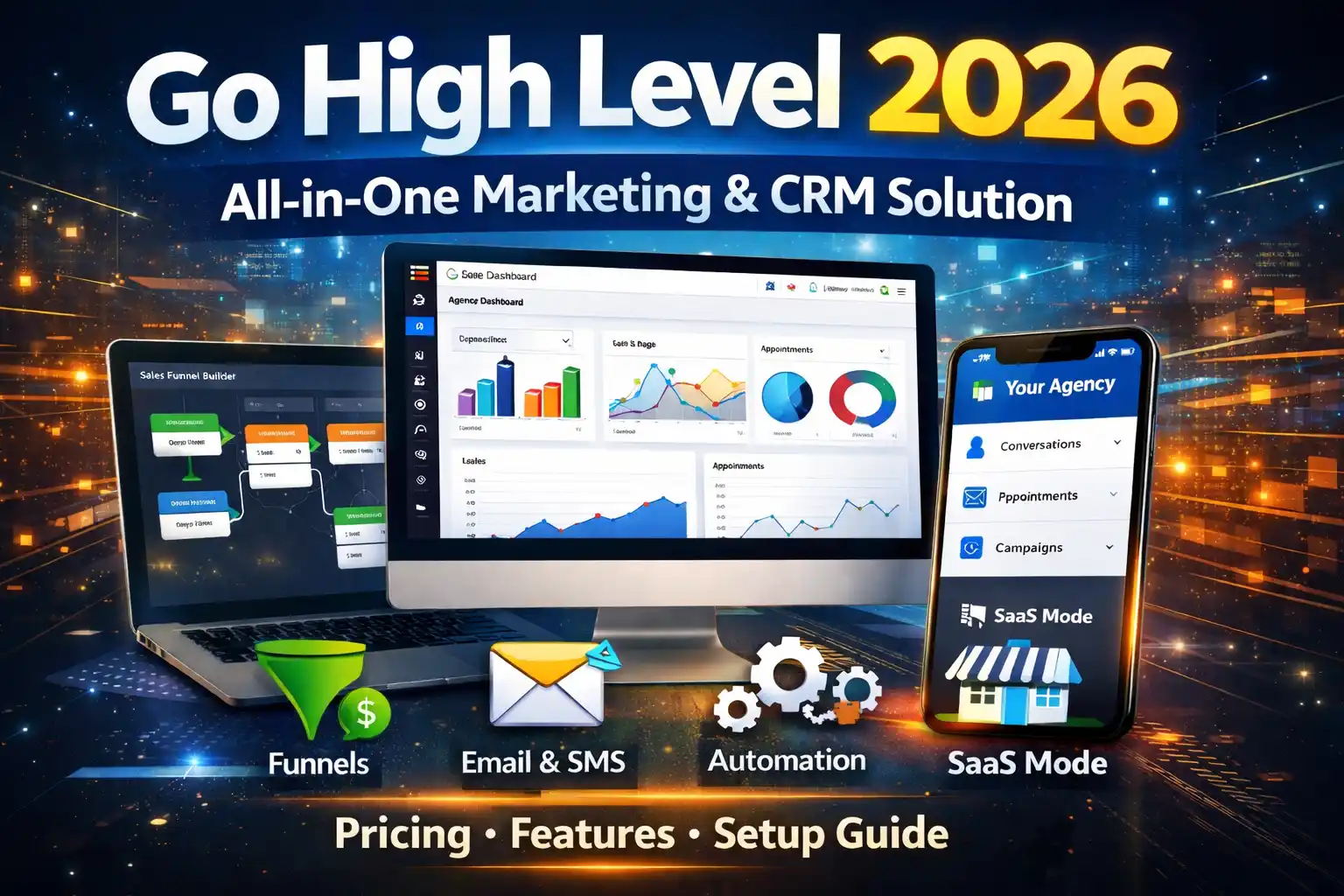
Go High Level (commonly referred to as GHL) is an integrated marketing, sales, and CRM platform built to replace the disconnected stack of tools most agencies and growing businesses rely on. Instead of stitching together separate systems for CRM, email marketing, funnels, SMS, calendars, and reporting, GHL brings everything into one centralized, cohesive ecosystem.
At its core, GHL’s mission is simple but powerful: eliminate tool sprawl. By consolidating essential growth tools into a single platform, it reduces operational complexity, minimizes integration failures, and creates a more predictable and scalable foundation for client and revenue growth.
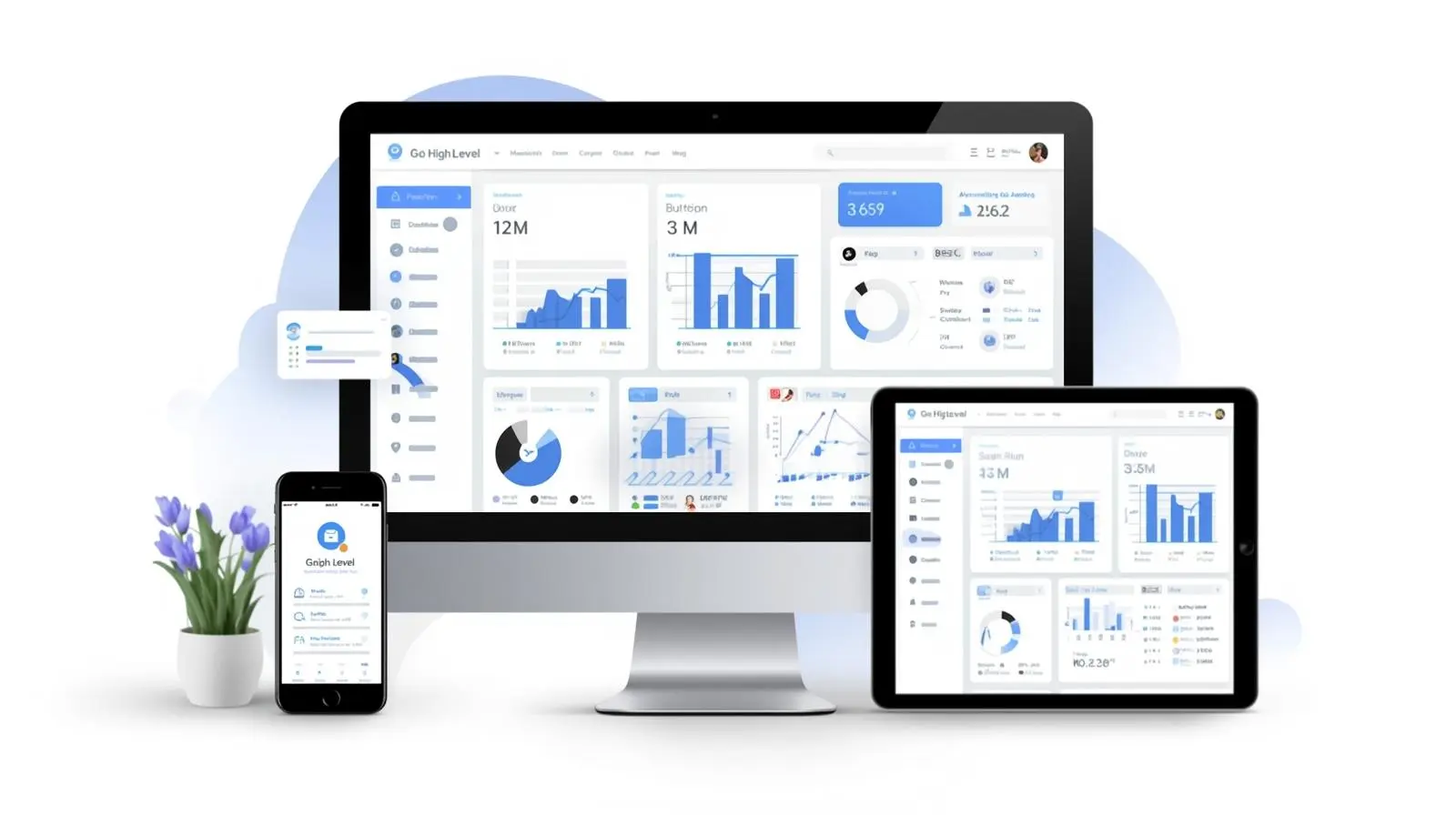
Go High Level is purpose-built for organizations that need efficiency, scalability, and cost control:
·Marketing agencies (small to mid-sized)
·SaaS businesses and productized service providers
·Freelancers and consultants
·Small business owners
·Sales-driven teams managing multiple pipelines
For these users, the biggest pain points are familiar multiple subscriptions, overlapping features, hidden costs, and fragile integrations. GHL addresses these challenges by offering one platform that scales with your business, allowing you to manage leads, automate follow-ups, and track results without constantly adding new tools or expenses.
Unlike general-purpose CRMs, GHL is agency-centric by design. Features like multi-account management, white-labeling, and SaaS resale capabilities make it uniquely suited for service providers who manage multiple clients and want full operational control.
Key Pillars of GHL’s Functionality
Go High Level’s value comes from how its core systems work together, not just from the features themselves:
·CRM & Pipeline Management – Centralized contact records, deal stages, and activity tracking
·Marketing Automation – Email, SMS, voicemail drops, and workflow automation from a single dashboard
·Funnel & Website Building – Landing pages, funnels, and forms designed for conversion
·Unified Communications – Two-way SMS, calls, email, and Facebook integrations in one inbox
What sets GHL apart is how seamlessly these components integrate. Leads captured through funnels instantly enter the CRM, trigger automated follow-ups, update pipelines, and feed reporting without relying on third-party connectors. This unified workflow improves data accuracy, speeds up execution, and enhances overall trust in your reporting and processes.
Why GHL Is a Game-Changer for Agencies and Businesses
For agencies and growing businesses, Go High Level goes beyond cost savings. It enables:
Streamlined operations through fewer tools and simplified workflows
Stronger client management with centralized data and automated engagement
New revenue opportunities via SaaS mode, white-labeling, and value-added services
Rather than being just another software expense, GHL can become a strategic profit center. Agencies can productize services, resell software access, and lock in recurring revenue while delivering better results with less operational overhead. For businesses focused on scale, this combination of efficiency, control, and monetization potential is what makes Go High Level a true all-in-one growth platform.
2. Deep Dive into Go High Level’s Core Features & Capabilities
Comprehensive CRM & Lead Management System
At the heart of Go High Level is a fully integrated CRM designed to work hand-in-hand with your marketing and sales efforts not as a disconnected database. All leads and customers live in a centralized contact system, complete with activity history, tags, custom fields, lead scoring, and segmentation.
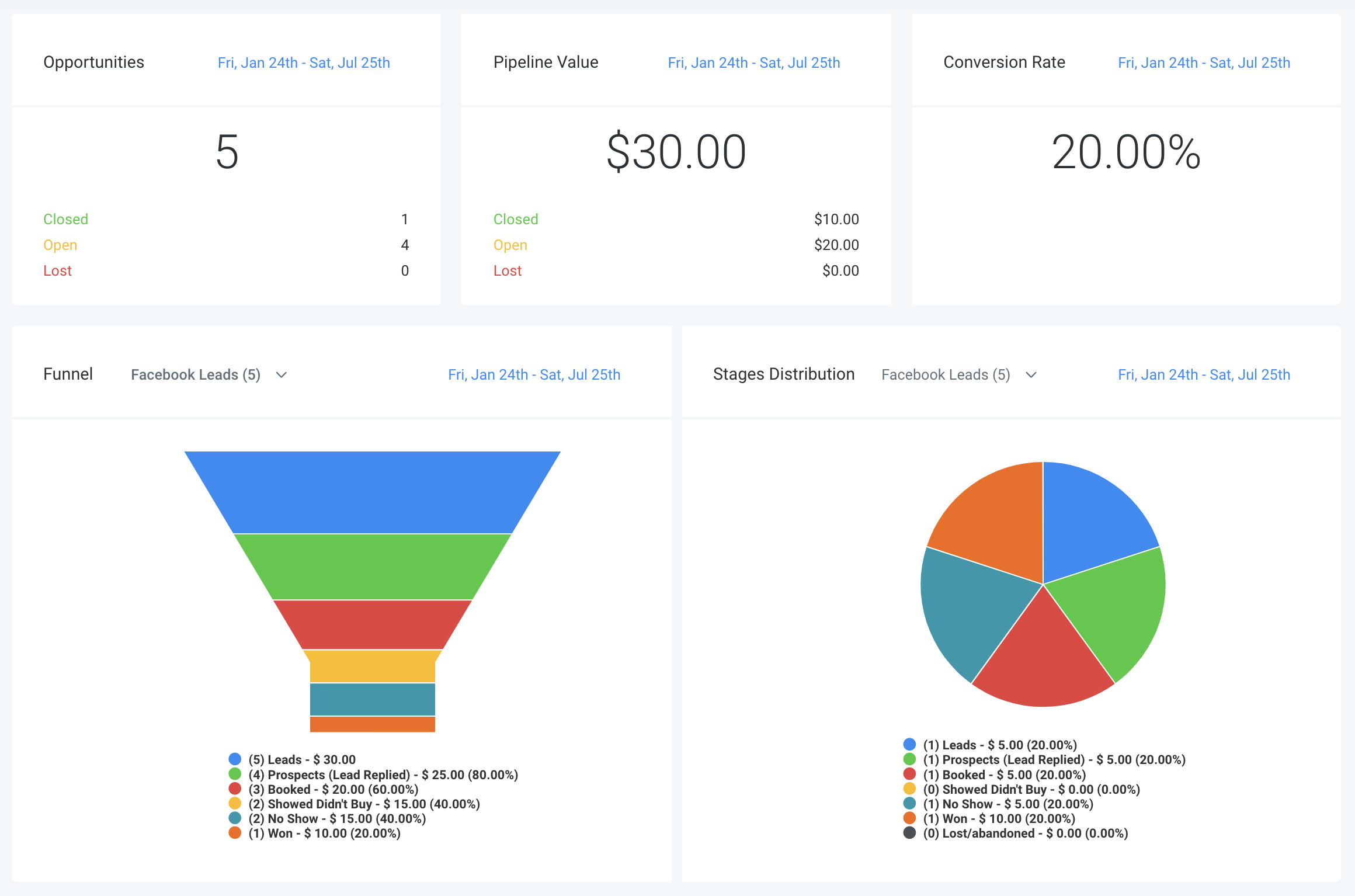
Visual sales pipelines allow teams to track deals across stages, assign ownership, and forecast revenue with clarity. What makes GHL different from standalone CRMs is native integration: every form fill, funnel action, SMS reply, or email click automatically updates the contact record and pipeline no manual syncing, no data gaps.
Powerful Marketing Automation Engine
GHL’s automation engine is built for scale. Using a visual workflow builder, you can automate:
Email nurture sequences
SMS campaigns and reminders
Voicemail drops
Task creation and internal notifications
Automations are driven by triggers, conditional logic, and branching paths, allowing campaigns to adapt based on user behavior (opens, clicks, replies, bookings). This creates more personalized experiences without increasing manual workload.
Expert Tip – Automate Repetitive Tasks Immediately:
Start by automating high-impact, repetitive actions such as lead follow-ups, appointment confirmations, and post-call nurturing. Implementing these from day one accelerates ROI and reduces team dependency on manual processes.
Integrated Funnel & Website Builder
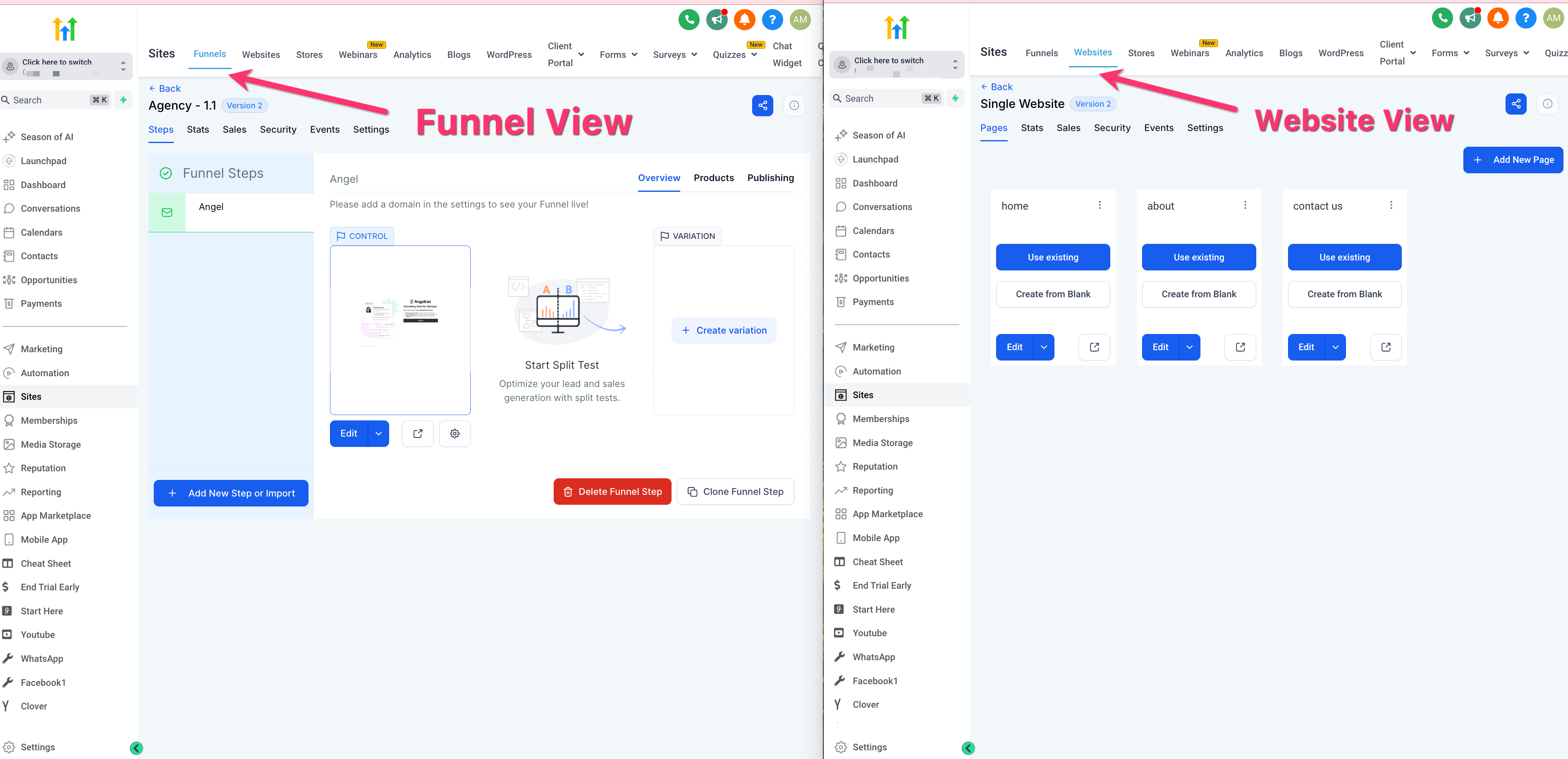
Go High Level includes a drag-and-drop funnel and website builder for creating landing pages, sales funnels, and full websites all within the same platform as your CRM and automation tools.
You’ll find:
Conversion-focused page elements
Industry-specific, pre-built templates
Native form and calendar integrations
Because the builder is fully integrated, every visitor action feeds directly into your CRM and automation workflows. Built-in A/B testing and analytics allow you to compare variants, measure conversions, and optimize performance without external tools.
Email Marketing, SMS, & Call Tracking
GHL replaces multiple communication tools with a single unified system:
Built-in email editor with bulk sending and scheduling
Two-way SMS for real-time conversations and automated replies
Mass texting for campaigns and announcements
Call tracking, recording, and attribution for inbound and outbound calls
All communication is logged at the contact level, giving teams full visibility into every interaction critical for sales follow-ups, compliance, and performance tracking.
Online Scheduling & Appointment Booking
The platform includes a robust appointment scheduling system that integrates seamlessly with Google and Outlook calendars. Leads can book appointments directly from funnels, emails, or SMS links.
Automated confirmations, reminders, and follow-up sequences reduce no-shows and keep pipelines moving without manual coordination from your team.
Reputation Management & Review Generation
Go High Level helps businesses actively generate and manage online reviews. You can automate review requests via SMS or email and route satisfied customers to public platforms.
Native integrations with Google Business profiles and other review platforms make it easier to build credibility, improve local SEO, and protect brand reputation at scale.
Robust Reporting & Analytics Dashboards
GHL’s reporting dashboards provide real-time visibility into marketing and sales performance. You can track:
Lead sources and attribution
Campaign performance metrics
Pipeline value and conversion rates
Revenue and appointment outcomes
Dashboards are customizable, allowing agencies and businesses to focus on KPIs that matter most. Interpreting these insights enables smarter budget allocation, faster optimization, and clearer ROI reporting for clients or internal stakeholders.
Beyond the Core: Advanced Features & Expanding Functionality
Go High Level extends well beyond traditional CRM and marketing tools:
Courses & Memberships – Build, host, and sell online courses or gated content
Payments & Invoicing – Accept payments, manage subscriptions, and automate billing
AI Conversations & Workflow AI – Use AI to respond to leads, qualify prospects, and optimize workflows
For monetization and transactions, integrating trusted payment gateways like Stripe and PayPal is essential. These integrations enable invoicing, SaaS subscriptions, course sales, and e-commerce transactions directly inside GHL without relying on external systems.
3. Go High Level Pricing: Understanding Every Tier and Add-on
Understanding GHL’s Pricing Philosophy
Go High Level follows a base subscription + usage-based add-on pricing model. This approach keeps the core platform predictable while allowing businesses to scale communication volume as needed.
Base subscription covers access to the platform, core features, and account structure
Usage-based costs apply to communication services such as SMS, phone calls, emails, and AI-powered interactions
This model is transparent but only if you understand where variable costs come from. SMS, calls, and emails are not “unlimited”; they are billed based on actual usage through integrated third-party services. When monitored correctly, this structure prevents overpaying for unused capacity and supports controlled scaling.
Important: Usage-based charges are separate from your GHL subscription and can vary month to month based on activity.
Detailed Breakdown of Core Subscription Plans
Agency Starter Plan
What’s included:
CRM & contact management
Funnel & website builder
Email marketing and SMS campaigns
Call tracking & recording
Online scheduling and calendars
Reputation management tools
Basic automation workflows
Limited reporting and analytics
Mobile app access
Key limitations:
Only one sub-account (your own business)
No white-labeling (GHL branding remains visible)
This plan is ideal if you’re validating GHL for internal use and don’t need client account separation yet.
Agency Unlimited Plan
Growing marketing agencies and businesses managing multiple brands, locations, or clients.
What’s included (everything in Starter, plus):
Unlimited sub-accounts for clients
Advanced marketing automation (campaigns, triggers, workflows)
Advanced reporting and dashboards
Custom fields and deeper CRM customization
Client access controls
White-label desktop app
White-label mobile app (branded for your agency)
API access
Optional SaaS mode add-on
This is the most popular plan for agencies because it removes account limits and unlocks full white-label control, making it possible to deliver GHL as part of your own service offering.
Agency Pro Plan (SaaS Mode–Focused)
Best for:
Large agencies, SaaS resellers, and businesses focused on high-volume client onboarding and recurring revenue.
What’s included (everything in Unlimited, plus):
·Advanced SaaS mode capabilities
·Automated client onboarding and billing logic
·Agency-level performance reporting
·Dedicated onboarding support
·Priority feature access
·Expanded API limits
·Advanced customization and analytics
·Built-in lead generation and monetization tools
This plan is designed for organizations treating GHL as a revenue platform, not just an internal tool enabling structured SaaS pricing, automated provisioning, and scalable client management.
Navigating Usage-Based Add-ons & External Costs
This is where many users feel confused so clarity matters.
Twilio
Used for SMS and voice calls. Costs depend on message volume, call duration, and destination (country-specific rates).
Mailgun
Handles email delivery. Pricing is based on the number of emails sent per month.
AI Conversation & Workflow AI
AI-driven chat, responses, and workflow enhancements are billed separately, typically usage-based.
How to avoid bill shock:
Set usage alerts inside Twilio and Mailgun
Limit automations that send high-frequency messages
Use conditional logic to reduce unnecessary outreach
Review communication reports weekly during early rollout
Once understood and monitored, these add-ons are not “hidden costs” but scalable levers you only pay more when your activity (and revenue potential) increases.
Annual vs. Monthly Billing: Your Savings Strategy
Monthly billing offers flexibility and is ideal for:
Short-term testing
Initial implementation phases
Agencies still validating fit
Annual billing provides meaningful savings (often ~15–20%) and makes sense when:
You’ve committed to GHL long term
You’re onboarding clients consistently
You want predictable operating costs
For agencies planning to scale, annual billing typically delivers better ROI.
Pricing Transparency & Official Sources
All pricing figures below are estimates and subject to change. Go High Level updates pricing periodically.
Always verify the most current and accurate details directly on the official Go High Level pricing page before making a purchase decision.
4. Choosing Your Path: Go High Level Package Comparison
5. Unlock Agency Growth: Demystifying Go High Level’s SaaS Mode
What Is Go High Level SaaS Mode?
Go High Level SaaS mode allows agencies to rebrand, customize, and resell the GHL platform as their own proprietary software. Instead of positioning GHL as a third-party tool, you offer clients a fully branded system under your agency’s name complete with custom pricing, onboarding, and billing.
From a technical standpoint, SaaS mode is built on agency-managed sub-accounts and full white-labeling. Each client operates inside an isolated sub-account that you control, while your agency manages access, features, pricing, and branding centrally. This architecture ensures security, scalability, and operational consistency across all clients.
The Transformative Benefits for Agencies
SaaS mode fundamentally changes how agencies grow and monetize:
Recurring revenue streams through monthly or annual software subscriptions
Higher client retention due to deeper platform dependency (“stickiness”)
Stronger brand loyalty, as clients log into your software daily
Clear market differentiation versus agencies offering only services
Go High Level as a Profit Center (Not Just Cost Savings)
Most agencies adopt GHL initially to reduce software costs. SaaS mode flips the equation turning software into a scalable business model. Instead of passing costs through, agencies package tools + services into a recurring offer, increasing lifetime value per client while stabilizing cash flow.
Setting Up Your White-Label SaaS Offering
Step-by-step overview:
1.Enable SaaS mode within your GHL agency account (available on higher-tier plans)
2.Define client plans with custom pricing, feature access, and usage limits
3.Automate onboarding so new clients are provisioned instantly upon signup
4.Configure billing for subscriptions, upgrades, and downgrades
5.Monitor usage and performance at the agency level
This automation removes manual setup work and ensures every client receives a consistent experience.
Expert Tip – Understand SaaS Mode Potential:
Treat SaaS mode as a standalone revenue stream. Model pricing tiers, calculate margins, and align features with client segments to maximize recurring income.
Mastering White-Labeling for Seamless Branding
True SaaS success depends on brand continuity. Go High Level enables deep customization so clients never see third-party branding.
Key branding elements include:
Custom domains for client login portals
·White-labeled desktop and mobile apps
·Agency logos, colors, and brand assets
·Branded system emails and notifications
To configure custom domains reliably, providers like GoDaddy or Cloudflare are commonly used for DNS management and security.
Expert Tip – Master White-Labeling for Branding:
Customize every client-facing touchpoint login screens, apps, email footers, and URLs to create a seamless, trust-building brand experience.
Strategies for Marketing Your White-Label SaaS
To sell your rebranded platform effectively:
Position it as an all-in-one growth system, not “software access”
Bundle it with onboarding, support, and strategy for higher perceived value
Emphasize simplicity, cost savings, and centralized control
Offer tiered plans for different client sizes and needs
The strongest message is consolidation: one branded platform replacing multiple tools, reducing complexity while improving results.
6. Getting Started: Go High Level Installation & Initial Setup Guide
Account Creation & First Login
Getting started with Go High Level is straightforward:
1.Sign up for a GHL agency account from the official website
2.Verify your email and log in to your agency dashboard
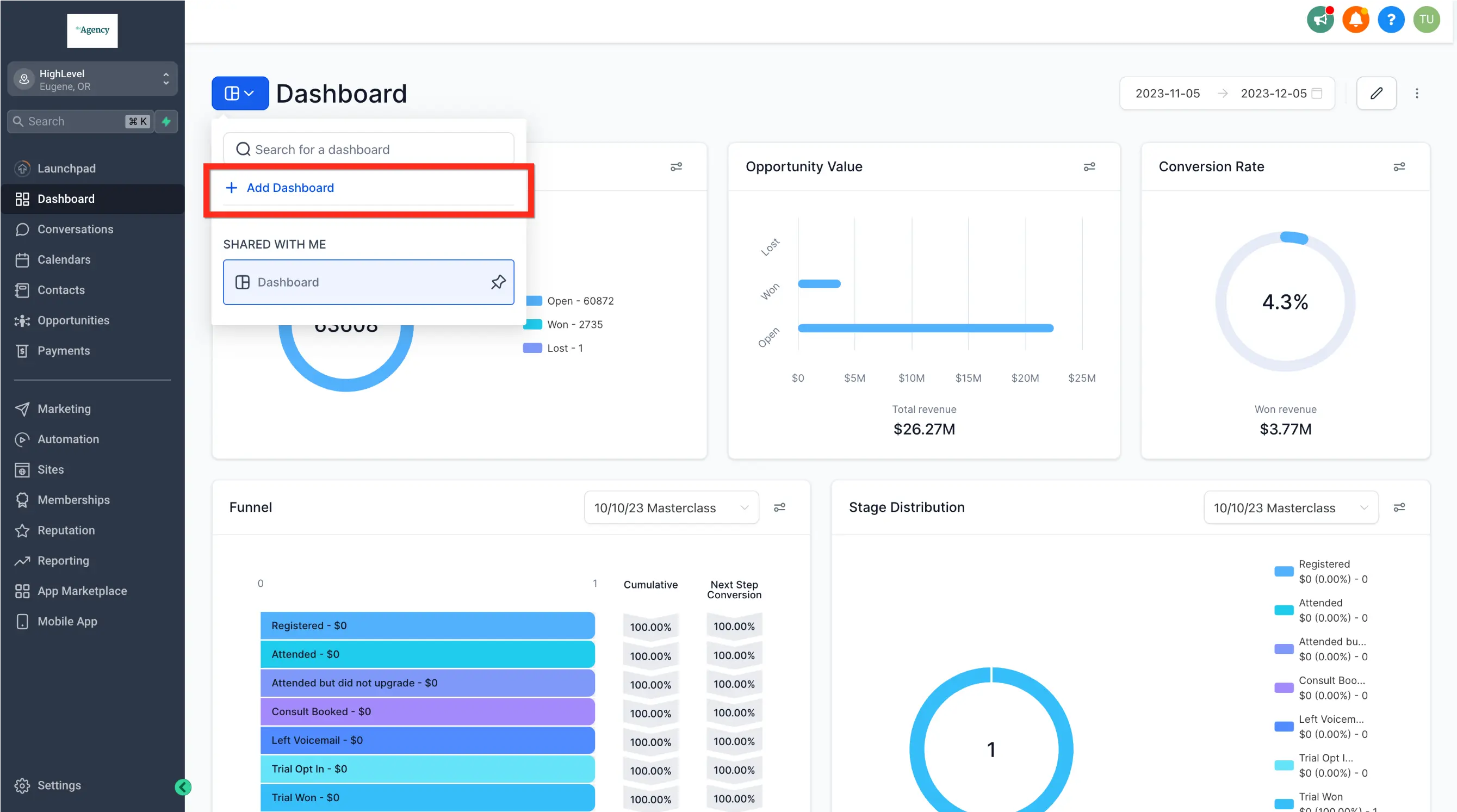
3.Familiarize yourself with the main navigation: Contacts, Automation, Sites, Payments, Reporting, and Settings
On first login, you’ll land in the agency-level view where all sub-accounts (locations) are managed. This centralized structure is key to scaling efficiently.
Configuring Basic Agency Settings
Before onboarding clients, configure your agency foundation:
Add your agency name, business details, and branding
Set the correct time zone (critical for automations and appointments)
Create user roles and permissions for team members (admin, sales, support)
This step ensures operational accuracy and prevents permission-related issues later.
Connecting Your Custom Domain
A custom domain is essential for white-labeling and professionalism.
Step-by-step overview:
1.Purchase or select your domain
2.Add a CNAME record (for funnels/login portals)
3.Configure A records if required for specific assets
4.Wait for DNS propagation (can take up to 24–48 hours)
Common issues include incorrect record values or propagation delays. Always double-check entries and allow sufficient time before troubleshooting further.
For domain and DNS management, providers like GoDaddy and Cloudflare are commonly used.
Initial Client Onboarding (For Agencies)
Once your agency settings are ready, you can onboard clients:
·Create a new sub-account (location)
·Assign client-specific roles and access levels
·Enable only the features relevant to that client’s package
Expert Tip – Start with a Pilot Client:
Roll out GHL fully for one internal project or a cooperative pilot client first. This allows you to refine workflows before scaling to multiple accounts.
Setting Up Your First Location / Sub-Account
Inside a client sub-account:
·Import existing contacts and leads (CSV or integrations)
·Connect email and SMS services
·Verify sending domains and phone numbers
·Test inbound/outbound communication
Expert Tip – Strategize Before You Setup:
Map out ideal client journeys and internal workflows first. Purpose-driven automation prevents clutter and makes scaling far easier.
“From Zero to Client-Ready”: Your 7-Day Setup Checklist
To eliminate setup overwhelm, follow this structured timeline:
Day 1:
·Create agency account
·Configure profile, time zone, and users
Day 2:
·Connect custom domain
·Set up branding and white-label basics
Day 3:
·Create first sub-account
·Import contacts and pipelines
Day 4:
·Connect email, SMS, and calendars
·Verify communication settings
Day 5:
·Build core automations (lead capture, follow-ups)
Day 6:
·Create funnels or landing pages
·Test end-to-end lead flow
Day 7:
·QA, optimize workflows, and onboard first client
This checklist provides a clear, achievable path from signup to a fully operational, client-ready Go High Level environment in just one week.
7. Expanding Your Ecosystem: Essential Integrations for Go High Level
Understanding GHL’s Integration Philosophy
Go High Level is designed to minimize dependency on external tools by offering strong native integrations first then extending flexibility through third-party connectors and APIs when needed. The goal is a connected tech stack where data flows automatically, reducing manual work, errors, and delays.
·Native integrations = faster setup, fewer failure points
·Third-party connectors = flexibility for niche or advanced tools
A well-integrated stack ensures every lead, payment, appointment, and interaction is tracked end-to-end.
Critical Native Integrations
Payment Gateways
Connect Stripe and PayPal to handle:
·Invoicing and one-time payments
·Subscriptions and SaaS billing
·Course and product sales
This enables revenue collection directly inside GHL without external checkout tools.
Leveraging Third-Party Connectors
For apps outside GHL’s native ecosystem, connectors like Zapier and Integrately are essential.
Common use cases:
·Syncing data with accounting software
·Pushing leads into advanced BI or reporting tools
·Connecting niche industry platforms
These tools automate data transfer without custom development, extending GHL’s reach while keeping operations lean.
Data Migration Strategies (From Other Platforms)
When moving from platforms like HubSpot or ActiveCampaign, follow these best practices:
Clean and deduplicate contacts before import
Migrate core lists and pipelines first
Rebuild automations natively in GHL (don’t blindly copy)
Test email/SMS deliverability before full launch
API Access & Custom Integrations
For advanced teams, GHL’s API access enables bespoke integrations and deep system connections ideal for custom dashboards, internal tools, or proprietary workflows. Always reference official GHL developer documentation to ensure secure, compliant implementation.
8. Troubleshooting & Optimizing: Common GHL Challenges & Solutions
Even with a robust platform like Go High Level, new users often encounter predictable challenges during setup and scale. This section acts as a proactive “pitfalls & prevention” guide, helping agencies and businesses resolve issues quickly while optimizing performance long-term.
Addressing Common Setup & Configuration Issues
Domain Connection Errors
Most domain issues stem from DNS misconfiguration or propagation delays.
Troubleshooting steps:
1.Verify CNAME and A records match GHL’s requirements exactly
2.Remove conflicting or duplicate records
3.Allow up to 48 hours for DNS propagation
4.Clear browser and DNS cache before retesting
Email Sending Failures
Email deliverability problems usually involve incorrect authentication.
Checklist:
·Confirm Mailgun is properly connected
·Verify SPF and DKIM records are published and validated
·Ensure sending domains are verified
·Warm up new domains gradually to avoid spam flags
SMS Delivery Problems
SMS failures are commonly tied to account balance or compliance.
Fixes to apply:
·Check Twilio balance and usage limits
·Confirm phone numbers are active and properly assigned
·Review opt-in compliance and message formatting
Expert Tip – Engage with the GHL Community:
Participate in official and unofficial GHL Facebook groups and forums. These communities are often the fastest source of real-world solutions and feature updates.
Optimizing Workflows & Automation
Automation issues can quietly erode ROI if left unchecked.
Common problems:
·Triggers not firing due to missing conditions
·Conflicting automations acting on the same event
·Overly complex logic causing delays
Optimization best practices:
·Start with simple, linear workflows
·Use conditional logic sparingly
·Add internal notifications for critical steps
Expert Tip – Regularly Audit Your Workflows:
Review automations quarterly. Remove unused triggers, refine messaging, and align workflows with evolving business goals to maintain efficiency.
Client Management & Sub-Account Issues
Access & Permission Errors
·Ensure users are assigned the correct role
·Limit admin access to essential team members
·Test permissions using a non-admin account
SaaS Mode Billing Discrepancies
·Verify pricing plans and feature access rules
·Check usage-based add-ons separately
·Review automation logic tied to billing events
Clear role definitions and billing audits prevent client frustration and revenue leakage.
Performance & Speed Optimizations
To keep GHL running smoothly:
·Use updated browsers (Chrome, Edge, Firefox)
·Clear cache regularly during heavy configuration
·Avoid running excessive automations on the same trigger
·Archive unused campaigns and workflows
These steps maintain responsiveness and reduce system strain as accounts scale.
Mastering Go High Level: Common Pitfalls & Prevention
Most GHL frustrations are preventable. By understanding typical issues early DNS errors, deliverability problems, automation conflicts agencies can move faster and deliver better results for clients.
9. Go High Level: The Pros, The Cons, and the Honest Verdict
Choosing the right all-in-one platform is about balancing capabilities, costs, and fit. Here’s a transparent evaluation of Go High Level, highlighting both its strengths and limitations.
The Advantages of Using Go High Level (Pros)
1. Consolidation & Efficiency
·Replace multiple tools CRM, email marketing, SMS, funnels, calendars, call tracking, and reputation management with one unified platform.
·Saves costs and eliminates the headache of juggling disconnected systems.
2. Scalability for Agencies
·Unlimited sub-accounts and SaaS mode enable agencies to manage multiple clients efficiently.
·Full white-labeling lets agencies position GHL as their proprietary software, expanding revenue potential.
3. Robust Feature Set
·Offers end-to-end marketing, sales, and CRM capabilities in one ecosystem.
·Includes advanced automations, funnels, appointment scheduling, payment processing, and reporting dashboards.
4. Automation Power
·Automate repetitive tasks like lead follow-ups, appointment reminders, and nurture sequences.
·Triggers, conditional logic, and workflow branching streamline client journeys and internal operations.
5. Active Community & Support
·Large, engaged user base in official and unofficial forums.
·Regular updates and support resources help agencies stay current and troubleshoot quickly.
The Disadvantages & Limitations (Cons)
1. Learning Curve
·The platform’s extensive features can be overwhelming for first-time users.
·Requires a structured onboarding plan to realize full potential.
2. Usage-Based Costs
·SMS, calls, email, and AI features are billed separately through Twilio, Mailgun, and other services.
·Without monitoring, these can lead to unexpected expenses.
3. Overwhelm for Small Businesses
·Solo entrepreneurs or businesses with very basic needs may find GHL overkill.
·Simpler alternatives may suffice for limited use cases.
4. Dependency on Integrations
·While most core features are native, some niche tools or specialized reporting still require third-party connectors like Zapier or API customizations.
Maintaining an unbiased buyer’s guide perspective ensures readers understand both the strengths and realistic limitations of the platform.
Overall Value Proposition
Who benefits most:
Marketing agencies, SaaS businesses, consultants, and small-to-medium businesses seeking consolidation, scalability, and automation.
·Agencies aiming to leverage SaaS mode for recurring revenue and client retention.
Scenarios where limitations matter:
·Small businesses needing only a basic CRM or simple email tool.
·Teams unable or unwilling to invest time in onboarding and workflow setup.
·Businesses with extremely low volume of SMS/email may prefer pay-as-you-go alternatives.
10. Is Go High Level Right For You? Ideal Users & When to Consider Alternatives
Selecting the right platform requires aligning capabilities, complexity, and cost with your business needs. Here’s a practical guide to determine if Go High Level is the right fit.
Who Go High Level Is Best Suited For
1. Marketing Agencies
·Manage multiple clients from a single dashboard
·Offer white-labeled software solutions
·Generate recurring revenue with SaaS mode
2. SaaS Businesses
·Centralize marketing, sales, and customer lifecycle management
·Automate workflows and communication across multiple touchpoints
3. Small to Medium Business Owners
·Consolidate scattered tools into one platform
·Automate marketing, lead nurturing, and sales processes efficiently
4. Freelancers & Consultants
·Manage leads and campaigns professionally
·Offer high-value services with built-in automation and reporting
5. Sales Teams
·Leverage a comprehensive CRM with integrated email, SMS, and call tracking
·Automate follow-ups and pipeline management for better conversions
Key insight: GHL excels for users who want consolidation, automation, and scalability beyond what standalone tools can deliver.
When to Consider Alternatives (GHL Might Not Be the Best Fit)
1. Very Basic Needs
·Businesses only needing a simple email sender, light CRM, or basic scheduling may find GHL overkill.
2. Limited Budget & Technical Skills
·Users extremely cost-sensitive or uncomfortable navigating a complex platform may prefer single-purpose, easy-to-use tools.
3. Highly Niche Industry Software
·Certain industries may have specialized regulatory or workflow software that GHL cannot fully replace, even with integrations.
The Unseen Value of Go High Level: Unlocking Time & Scalability
While the initial investment and learning curve may feel high, GHL delivers long-term efficiency and growth:
·Reduce time spent managing multiple tools
·Automate repetitive client workflows
·Scale operations without adding overhead
·Enable recurring revenue through SaaS mode
Conclusion: Your Next Steps to Mastering Go High Level
·All-in-One Power: GHL consolidates CRM, marketing automation, funnels, communications, and reporting into one platform.
·Pricing & SaaS Mode: Understanding subscription tiers and SaaS capabilities is critical for cost-effective growth.
·Strategic Setup & Integrations: Proper setup and connected integrations ensure workflows operate smoothly and scale efficiently.
Actionable Advice & Next Steps
1.Start with a Trial: Hands-on experience accelerates learning and highlights real-world benefits.
2.Plan Your Workflow: Map client journeys, automation needs, and reporting requirements before diving into complex configurations.
3.Leverage Resources: Use GHL’s official documentation, community forums, and HighLevel University to avoid common pitfalls.
4.Consider SaaS Mode: Agencies should explore white-label SaaS capabilities for additional recurring revenue and client retention.
