How to Create a Sales Funnel Without ClickFunnels in 2026
The ClickFunnels Dilemma & The Alternative Promise
Many entrepreneurs start building sales funnels with platforms like ClickFunnels because they promise an all-in-one solution. But soon the reality hits: high monthly costs, limited customization, and vendor lock-in. You may feel stuck paying for features you don’t need while losing the flexibility to build a funnel that truly fits your business.
This frustration is common. Marketers want powerful funnels that generate leads and sales, but expensive platforms often restrict how much you can customize or scale. The result? Less control over your marketing system and more dependency on a single tool.
The good news is that there’s a better approach. Instead of relying on one rigid platform, you can build a modular sales funnel using specialized tools that work together. This method gives you more flexibility, lower costs, and full ownership of your funnel infrastructure.
In this guide, you’ll learn how to create high-converting sales funnels without ClickFunnels by combining the right tools for pages, email automation, payments, and analytics. The result is a custom funnel system that saves money, scales easily, and gives you complete control over your business growth.
Understanding Sales Funnels: The Core Stages Explained
What is a Sales Funnel?
A sales funnel is a structured path that guides potential customers from their first interaction with your brand to becoming a paying customer—and even a loyal advocate. Instead of relying on random marketing efforts, a funnel creates a clear journey that builds trust and moves people toward a decision.
For online businesses, this is essential. A well-designed funnel helps you attract the right audience, nurture relationships, and convert leads into customers consistently.
1. Awareness – Attracting Potential Leads
This is where people first discover your business.
Content Focus
Identifying the customer’s problem
Educational and helpful content
Common Tools
Blog articles
Social media posts
Online ads
SEO
Why Build a Modular Funnel? Benefits Beyond Cost Savings
The “Lego Block” Funnel Blueprint
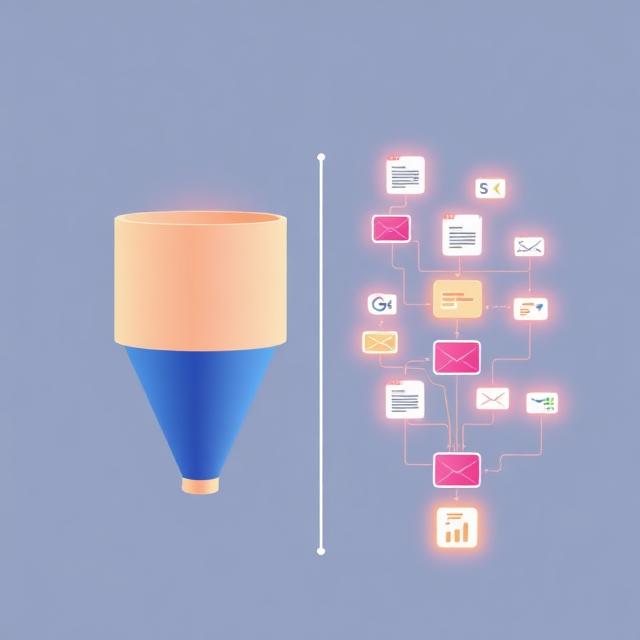
Think of a modular funnel like building with Lego blocks. Instead of relying on one rigid platform like ClickFunnels, you combine the best tools for each part of your funnel. This approach creates a system that is flexible, customizable, and built around your business needs.
Tailor-Made for Your Business
All-in-one platforms often force you to use their built-in features, even if they don’t fully match your workflow.
With a modular funnel:
You choose tools that fit your exact needs
Your funnel becomes custom-built, not one-size-fits-all
You avoid the limitations of restricted customization
Tailor-Made for Your Business
All-in-one platforms often force you to use their built-in features, even if they don’t fully match your workflow.
With a modular funnel:
You choose tools that fit your exact needs
Your funnel becomes custom-built, not one-size-fits-all
You avoid the limitations of restricted customization
Save Money Without Sacrificing Performance
One of the biggest frustrations with all-in-one platforms is the high monthly subscription cost.
With a modular system:
You pay only for the tools you actually use
Avoid expensive bundled features
Scale costs gradually as your business grows
This makes it ideal for budget-conscious entrepreneurs.
Access Best-in-Class Tools
Specialized tools usually perform better than all-in-one solutions.
Benefits include:
More advanced email automation
Stronger CRM features
Better analytics and integrations
Instead of compromising, you build a funnel using top-tier tools for each function.
Future-Proof Your Funnel
Another major advantage is avoiding vendor lock-in.
With a modular approach:
Your data is not trapped in one platform
You maintain full control over your marketing system
Your funnel can evolve with new technologies and business growth
In short, a modular funnel gives you flexibility, control, and long-term stability—the foundation for sustainable online business growth.
Essential Components of a Modular Sales Funnel
A modular funnel works by combining specialized tools, each handling a specific task. Instead of relying on a single platform like ClickFunnels, you connect the best tools together to build a flexible and powerful funnel system.
Landing Page & Funnel Builder
Purpose: Capture leads, present offers, and guide visitors toward conversion.
Key Features
Drag-and-drop page builders
Ready-made templates
Mobile-responsive design
A/B testing for optimization
Email Marketing & Automation
Purpose: Nurture leads, build relationships, and send automated follow-ups.
Key Features
Autoresponder sequences
Audience segmentation
Email performance analytics
CRM integration
Choosing Your Tech Stack: A Guide to Alternative Tools
Building a modular funnel means choosing the right combination of tools instead of relying on one platform like ClickFunnels. The key is selecting tools that match your budget, skills, and funnel goals.
Key Factors to Consider
Budget
Look for free tiers and affordable starter plans
Ensure pricing scales gradually as your business grows
Expert Tip:
Many tools offer free plans or trials. Test them before committing.
Step-by-Step: Building Your Sales Funnel (Without ClickFunnels)
Building a funnel without ClickFunnels is straightforward when you follow a clear process. The key is planning first, then assembling the right tools and automations.
1. Plan Your Funnel Strategy
Expert Tip: Map Your Funnel First
Before choosing tools, define your customer journey.
Key Steps
Identify your ideal customer
Define actions at each stage (opt-in, purchase, webinar signup
Set clear conversion goals
Example flow:
Traffic → Landing Page → Email Sequence → Sales Page → Purchase
2. Select the Right Tools
Choose one tool for each funnel component:
Landing page builder
Email marketing software
CRM system
Payment processor
Automation platform
Use free trials to test usability and compatibility.
3. Build Your Funnel Pages
Set up your domain and website foundation (often using WordPress).
Create key funnel pages:
Opt-in page
Sales page
Thank-you page
Checkout page
Crafting Compelling Copy
Expert Tip: Strong messaging often matters more than the tool you use.
Focus on:
Clear, benefit-driven headlines
Short persuasive bullet points
Strong calls-to-action (CTAs)
Design Best Practices
Good design improves conversions.
Clean layout
Mobile-responsive pages
Minimal distractions
Clear visual hierarchy
4. Set Up Email Automation
Configure your email platform and build automated sequences.
Typical sequences include:
Lead magnet delivery
Nurture emails
Sales follow-ups
Post-purchase engagement
Email Copy & Timing
Improve engagement with:
Personalization
Consistent follow-up timing
Expert Tip: Segment your audience to send more relevant offers.
5. Connect Payments and CRM
Integrate your checkout system with a payment processor like Stripe.
Then connect a CRM such as HubSpot CRM to:
Track leads
Manage customer data
Monitor sales activity
6. Automate Your Funnel
Use automation tools like Zapier or Make to link your tools.
Example Automations
New lead → Add to email list + CRM
Purchase → Send confirmation email + update CRM
Webinar signup → Trigger reminder emails
Automation saves time and ensures smooth data flow across your funnel.
7. Test Your Funnel
Before launching:
Test every link and form
Check email delivery
Run a test payment transaction
This ensures the entire funnel works from start to finish.
8. Launch and Optimize
Expert Tip: Start Simple & Iterate
Don’t wait for perfection.
Launch a basic funnel first
Drive traffic to it
Monitor conversions and user behavior
Improve based on real data
Optimizing Your Modular Funnel for Maximum Conversions
Building a funnel is only the first step. The real growth comes from continuous optimization—testing, analyzing data, and improving your funnel based on real user behavior.
A/B Testing: Improve What Works
Expert Tip: A/B Test Everything
Small changes can significantly improve conversions.
What to Test
Headlines
Calls-to-action (CTAs)
Images
Button colors
Form fields
Email subject lines
Testing Tools
Built-in A/B testing in Leadpages or Instapage
Experimentation tools like Optimizely
When analyzing results, look for statistical significance before making decisions.
Improve Conversion-Focused Page Design
Several elements strongly influence whether visitors convert.
Clarity and Simplicity
Make the offer easy to understand
Keep page design focused and distraction-free
Urgency and Scarcity
Use limited-time offers or bonuses to encourage action
Social Proof
Add testimonials, ratings, or success stories
Clear Calls to Action
Use direct language such as “Start Your Free Trial”
Value Proposition
Clearly explain the benefit your offer provides.
Expert Tip:
Invest time in learning conversion rate optimization (CRO) principles—not just how to use tools.
Track the Right Analytics
Expert Tip: Don’t Overlook Analytics
Data helps you identify what is working and what needs improvement.
Important metrics include:
Conversion rate
Bounce rate
Traffic sources
Time on page
Email open rates
Click-through rates
A common analytics platform is Google Analytics 4, along with analytics from your email platform, landing page builder, and CRM.
Identify Funnel Bottlenecks
Use analytics to answer key questions:
Where are visitors dropping off?
Which pages have low conversions?
Which traffic sources perform best?
Fixing a single bottleneck can dramatically increase overall funnel performance.
Segment Your Audience
Expert Tip: Segment Your Audience
Different customers have different needs. Segmentation improves relevance.
Examples
New leads vs returning visitors
Webinar attendees vs ebook downloaders
First-time buyers vs repeat customers
Use Dynamic Content and Tailored Messaging
Segmentation allows you to personalize your funnel.
Strategies include:
Showing different offers to different audiences
Sending targeted email sequences
Customizing messaging based on user behavior
This level of personalization increases engagement, trust, and conversions.
Cost Comparison: ClickFunnels vs. Modular Alternatives
One of the biggest motivations for building a modular funnel instead of relying on platforms like ClickFunnels is cost efficiency and flexibility. While all-in-one tools bundle everything together, modular funnels allow you to pay only for the tools you actually need. Below is a simplified comparison of typical monthly costs.
Conclusion: Empowering Your Funnel Freedom
Building a powerful sales funnel doesn’t require relying on restrictive all-in-one platforms like ClickFunnels. As we’ve explored, a modular funnel approach allows you to combine specialized tools to create a system that is flexible, scalable, and tailored to your business needs.
By understanding the core components of a funnel—landing pages, email automation, CRM, payments, and integrations—you gain the ability to design a marketing system that works exactly the way you want. Instead of paying for bundled features you may never use, you can build a stack that balances performance, cost efficiency, and long-term control.
Most importantly, a modular funnel gives you freedom. You avoid vendor lock-in, keep ownership of your data, and retain the ability to upgrade or replace tools as your business evolves.
You now have the knowledge and roadmap to start building your own high-converting funnel. Begin small, choose a few essential tools, and launch a simple version first. As you collect data and learn what works, you can refine and scale your funnel step by step.
Don’t let perceived complexity stop you. The flexibility, control, and cost savings of a modular funnel make it one of the most powerful strategies for modern digital businesses.
This guide is regularly reviewed and updated to keep tool recommendations and best practices relevant in the fast-changing world of online marketing.
